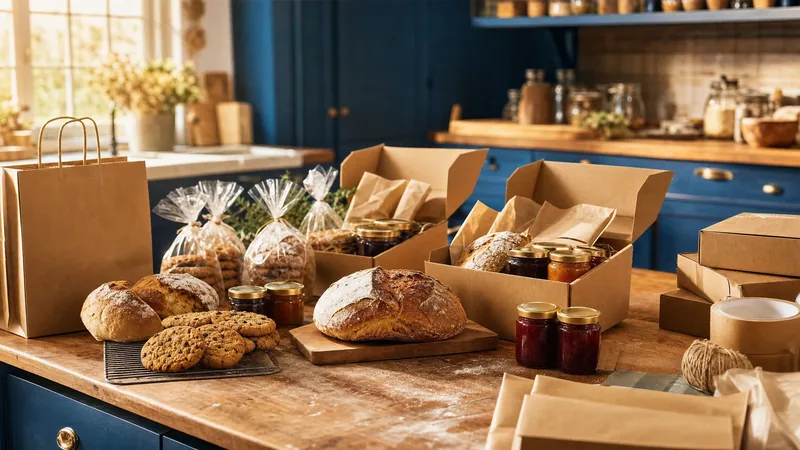
New Mexico Cottage Food Law: Homemade Food Act Rules, Allowed Foods and Where to Sell
New Mexico Cottage Food Law: Homemade Food Act Rules, Allowed Foods and Where to Sell
If you bake, roast, dry or mix food at home and want to sell it to customers in New Mexico, the state's cottage food law is probably the path you need. New Mexico calls it the Homemade Food Act, and it lets you sell certain low-risk foods without a food permit from the New Mexico Environment Department (NMED), Bernalillo County or the City of Albuquerque. People search for it as the new mexico cottage food law, the new mexico homemade food act, the nm cottage food law or the nm homemade food act, and they all mean the same statute. The rules are narrower than most people expect, so this guide covers which foods qualify, where you can legally sell, and what else you need to set up before your first sale.
Disclaimer: This guide is informational content, not legal or tax advice. Rules change, and local details vary. Consult a qualified New Mexico attorney or a CPA for your situation, and confirm current requirements with the agencies named below before you sell.
What the Homemade Food Act Covers
The Homemade Food Act (HB 177) took effect on July 1, 2021. Under the Act, food that is low risk and non-TCS (non-time/temperature control for safety) can be made in a private home, farm or ranch and sold directly to consumers with no permit from NMED, Bernalillo County or Albuquerque. TCS food is food that must be kept at controlled temperatures to stay safe, such as meat, dairy and many prepared foods that bacteria can grow in without refrigeration.
The Act looks at two things: the food and the sales channel. Making a product at home does not qualify it by itself. A batch of granola qualifies. A batch of salsa does not, even if it is made in the same kitchen with the same equipment.
Foods You Can and Cannot Sell
Use this list as a starting point. If a product is not clearly on the allowed side, ask NMED before you list it for sale.
| Allowed (non-TCS) | Not allowed (TCS) |
|---|---|
| Non-refrigerated baked goods | Meat and poultry |
| Candy | Jerky |
| Popcorn | Fish |
| Granola | Salsa |
| Dry mixes | Canned vegetables and pickles |
| Roasted coffee | Pepper jelly |
| Dehydrated fruit | Dairy |
| Whole produce | Cream pies and cheesecake |
| Jams and jellies | Juices |
| Kombucha | |
| Hummus | |
| Sprouts | |
| Dressings |
Two items trip up almost every new seller. First, jams and jellies are allowed, but pepper jelly is not. Second, jerky is shelf stable and still excluded, because it is on the TCS list. Dehydrated fruit is allowed, but dried meat is not. Whole produce is allowed because you are selling it unprocessed, while canned vegetables and pickles are not.
Get a Food Handler Card Before Your First Sale
You need a food handler card before you sell anything under the Act. Get it first, not after your first market day. Contact the NMED Food Program to confirm which food handler training courses it accepts, what each one costs, and how long the card stays valid. Keep a copy of the card with your sales records, and bring it to any market or event that asks for proof.
Labeling Requirements
Every package you sell needs a label that shows the following:
- Producer name
- Producer address
- Producer phone number
- Producer email address
- Common name of the food
- Ingredients listed in descending order
- Net quantity
- The statement: "This product is home produced and is exempt from state licensing and inspection. This product may contain allergens"
A label missing any of these items is the easiest way to draw attention from an inspector or a customer. Print the required statement exactly as written, and use the same label for every package of that product so your records match what buyers receive.
Where You Can Sell
The Act allows direct sales to the end consumer inside New Mexico. Approved channels include:
- Farmers markets
- Festivals and craft fairs
- Roadside stands
- Home pickup by customers who come to your property
- Online orders, including mail delivery, as long as the buyer receives the product in New Mexico
These channels are not allowed:
- Restaurants
- Wholesalers
- Stores, including shops that would resell your product
- Any buyer outside New Mexico, whether the sale is online, by mail or in person
The rule to remember is simple: you sell directly to the person who will eat or use the food. Once a shop puts your jam on its shelf, you have left the cottage food channel, and the Act no longer covers the sale. If a restaurant wants your granola for its breakfast menu, that is a wholesale arrangement and needs a different permit path, which you should confirm with NMED before you agree to anything.
Local Rules: Zoning and City or County Registration
The Act removes the state and county food permit, but it does not remove other local rules. Local zoning and home occupation rules still apply. Before you run sales from your home, check with your city or county planning or zoning office. The concern is greatest if customers visit the house, if you store inventory in a garage, or if you have employees.
Cities and some counties also charge their own flat annual registration for home businesses. These are separate from the food permit exemption, so the Act does not cover them. Albuquerque and Bernalillo County waive the food permit under the Act, but ask your city or county clerk whether a business registration applies to you and what it costs. Do not assume the answer is no because the food permit is no longer required.
Taxes and Business Setup
New Mexico has no general statewide business license. The Business Tax Identification Number (BTIN), formerly called the CRS number, is free and comes from the Taxation and Revenue Department (TRD). It is a tax registration, not a license, and you can apply through the TRD website at tax.newmexico.gov. Getting one is the first tax step for most sellers.
New Mexico has no sales tax. Instead, it levies a gross receipts tax on the seller, not the buyer. The state rate is 4.875%, and combined state and local rates run from 5.25% to 9.4375% under the schedule effective July 1, 2026 through June 30, 2027. Whether your particular home sales are taxable, how to report them and how to track your receipts should be confirmed with TRD or a CPA before you start selling.
You do not need an LLC to sell under the Act. Many home sellers start as a sole proprietor using their own name. New Mexico has no statewide DBA or assumed-name registration, so you do not file a state form to trade under a brand name. If you want liability separation from your personal assets, an LLC is an option. The Articles of Organization cost $50 and are filed through the SOS Enterprise Business Filing System. An LLC files no annual or biennial report with the Secretary of State. If an LLC will trade under a different name, that name must appear in the articles. Whether an LLC makes sense for a small food business is a question for an attorney or CPA, and the New Mexico Small Business Development Center (nmsbdc.org) can help you think through the setup.
Open Questions to Confirm
Some points vary by product and by agency, so confirm each one before you grow your sales:
- Sales cap: NMED and Albuquerque guidance names no sales dollar cap under the Act. Ask the NMED Food Program whether any limit applies to your sales volume, and ask again as your business grows.
- Borderline products: If a recipe is not clearly on the allowed or excluded list, get NMED's answer in writing before you sell it.
- Food handler card: Confirm which courses are accepted and how long the card is valid.
- City and county rules: Confirm any flat annual registration, zoning restrictions and home occupation limits with your local government.
Checklist Before Your First Sale
- Confirm that every product you plan to sell is on the allowed (non-TCS) list.
- Complete and keep your food handler card on file.
- Print labels with every required field and the exact home-produced statement.
- Apply for a free BTIN with TRD.
- Check city and county zoning, home occupation and registration rules.
- Choose your sales channels, and keep every sale inside New Mexico.
- Keep sales and expense records from the first transaction, and review your reporting with a CPA.
The Homemade Food Act gives home food sellers a real path to market without a food permit, but only for the right products sold through the right channels. Check each product against the lists, label every package correctly, and confirm the open questions with the agencies that govern them. This guide is informational only and is not legal or tax advice. Talk with a qualified attorney or CPA before you make business decisions based on it.