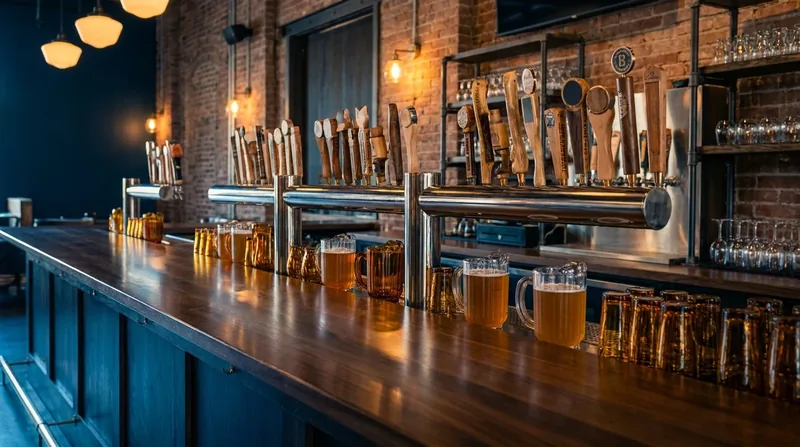
How to Start a Bar or Tavern in New Mexico: Dispenser License, Quota and Transfers
How to Start a Bar or Tavern in New Mexico: Dispenser License, Quota and Transfers
If you plan to open a bar or tavern in New Mexico that sells spirits, you need a dispenser license from the Alcoholic Beverage Control Division of the Regulation and Licensing Department (RLD). Anyone searching for a new mexico bar license is usually trying to answer one question: how do I actually get one? For most new owners, the practical answer is to buy a license that already exists and transfer it to your address, because dispenser licenses are limited by statute. Applying for a new one is not the usual route.
This guide covers the order of operations, the state fees, and the points you must confirm with the Division before you sign anything.
Informational content only. This article is not legal or tax advice. Fees, rules and agency practices change, so confirm every figure with the agency named in each step. Before you sign a purchase contract or lease, have a New Mexico attorney review it, and have a CPA review your entity and tax choices.
What You Need Before You Start
Gather these items before your first call to the state. Missing one of them is the most common reason a transfer stalls.
- A legal entity. An LLC files Articles of Organization with the New Mexico Secretary of State for a $50 filing fee. A corporation files Articles of Incorporation for a $100 filing fee.
- An Employer Identification Number (EIN) from the IRS for your entity.
- A New Mexico Business Tax Identification Number (BTIN) from the Taxation and Revenue Department (TRD). It is free. It is a tax registration, not a license.
- A lease or signed letter of intent for the premises, with a site plan.
- Written zoning confirmation that a bar or tavern use is allowed at that address.
- Your city or county business registration, where your local government requires one.
- A purchase agreement draft prepared by an attorney, with contingencies (covered in Step 6).
- Funding for the purchase price, plus working capital. The license price is set privately between seller and buyer and is not a state fee.
- The Division's phone number: (505) 476-4875.
Step 1: Form Your Business Entity
Form the entity before you negotiate with a seller. The license transfer will be issued to the entity that owns the business, so the name and structure need to be final.
For an LLC, file the Articles of Organization online through the SOS Enterprise Business Filing System at https://enterprise.sos.nm.gov/. The filing fee is $50. An LLC name must include "limited liability company," "limited company," or an abbreviation such as LLC, L.L.C., L.C. or LC. You can reserve a name for $20 for 120 days, and the reservation cannot be renewed. If your bar will trade under a name different from the LLC's legal name, state that trade name in the articles of organization. New Mexico has no statewide DBA or assumed-name registration, so the articles are the only place that name gets recorded.
Every LLC must maintain a registered agent for service of process. The agent must be a New Mexico resident individual, or a qualifying business with a New Mexico place of business at the registered office address. Changing the registered agent later costs $20 for an LLC.
An LLC files no annual or biennial report with the Secretary of State and pays no LLC franchise tax. An LLC taxed as a default pass-through does not owe the $50 corporate franchise tax.
A corporation pays a $100 filing fee, files a Corporate Report every two years for a $25 fee, and owes a $50 annual corporate franchise tax. The first report is due within 30 days after the certificate of incorporation is issued. Corporate income tax is a flat 5.9% of taxable income for tax years beginning on or after January 1, 2025. Most bar owners choose an LLC for simplicity, but a CPA should confirm which structure fits your plan.
Step 2: Register for Tax and Local Business Registration
New Mexico has no statewide general business license. The state's business navigator lists three universal steps: register the entity with the Secretary of State, obtain tax ID numbers from TRD (free), and obtain any activity-specific licenses from RLD. A bar adds the dispenser license to that list.
Register with TRD for your BTIN through https://www.tax.newmexico.gov/. The TRD page on who must register is at https://www.tax.newmexico.gov/businesses/who-must-register-a-business/.
New Mexico has no sales tax. Instead, the seller pays a gross receipts tax (GRT). The state rate is 4.875%, and combined state and local rates run from 5.25% to 9.4375% under the schedule effective July 1, 2026 through June 30, 2027. Your bar's combined rate depends on the location, so confirm the rate for your address with TRD. Your bar will report GRT on its receipts.
Cities and some counties charge their own flat annual business registration. The amount varies by jurisdiction, and we do not list a figure here. Ask the city or county clerk where your building sits, whether Albuquerque, Las Cruces, Santa Fe or elsewhere, what registration applies and what it costs.
Step 3: Check Quota and Availability With the Division
Dispenser licenses are quota-limited by statute to one license per 2,000 inhabitants of the local option district. That cap is the reason most openers buy an existing license rather than applying for a new one. Whether a license is available in your district, and at what count, is a question for the Division, so ask before you commit money.
Call the Division at (505) 476-4875 and ask:
- Which local option district covers my proposed address?
- Is the district at or near its quota, and are licenses available to transfer in?
- Is the license I am considering in good standing, with no open violations or pending actions?
- What is the current status of the church-proximity rule (see Step 5)?
- What fees and hearing steps apply to a transfer to my address, and how long does the Division take?
Write down the names of the staff members you speak with and the date of each call. Those notes are useful if the file later raises a question.
Step 4: Find a License and Vet It
Licenses are bought and sold, transferred to new locations, or leased, but each of those moves requires the Division's prior approval. A seller cannot simply hand you the license at closing. Your deal has to be built around the approval process.
Before you negotiate, confirm with the Division that the license is held by the seller you are dealing with, that the license is active, and that it has no disciplinary history that would affect a transfer. Ask the seller for their documentation, then check it against what the Division tells you. If the seller cannot produce clean records, walk away or pause.
Step 5: Confirm Zoning and the Church-Proximity Rule
Local zoning controls where a bar can operate. A license approval from the state does not override a city or county zoning decision. Get written zoning confirmation for your exact address and use, and check any conditions attached to it.
New Mexico has a state church-proximity rule under NMSA 60-6B-10. A 2025 bill, SB 466, proposed repealing it. RLD does not list that repeal as enacted, so treat the rule as applying until the Division confirms otherwise. Ask the Division directly whether the rule affects your address, and have your attorney confirm the answer in writing before you sign. Do not rely on a seller's or broker's summary of this issue.
Step 6: Sign a Purchase Agreement With Contingencies
The purchase price of a license is negotiated privately between seller and buyer. It is not a state fee, and no state agency sets it. Because the state fees are small by comparison, the purchase price is usually the largest single cost in the transaction.
Your purchase agreement should make closing depend on the things that can still fail. At minimum, include contingencies for:
- Division approval of the transfer to your entity and address.
- The outcome of the local public hearing.
- Written zoning confirmation for your address.
- A signed lease or property purchase that you are satisfied with.
- The church-proximity question, confirmed in writing by the Division.
Set out what happens to your deposit if any contingency fails. Ask your attorney to address the seller's obligation to cooperate with the transfer application.
Step 7: File the Transfer Online and Attend the Local Hearing
Transfers are applied for online through the Division's NM-PLUS system. The transfer of ownership fee is $200 for the first license, plus $10 for each additional license, under 15.11.26.9 NMAC.
A transfer goes to a local public hearing before it is decided. Neighbors, churches, and local officials can attend and speak. Prepare for that meeting. Bring your floor plan, your hours of operation, your plan for security and noise control, and a short description of the concept. Answer questions directly, and do not promise anything your plan cannot deliver. Ask the Division how much notice you must give and when the hearing is scheduled, because the timing varies.
Step 8: Pay the Fees and Prepare to Open
Once the transfer is approved, the license carries an annual fee of $1,300 under 15.11.26.8 NMAC, as of 2026. That fee is separate from the purchase price, and you should budget for both. Confirm the current annual fee and renewal date with the Division before you finalize your budget.
Before you open, also confirm the following with the agencies that apply to your building:
- Your city or county business registration and any fees it charges.
- Building, fire and occupancy approvals for the space.
- Food service requirements if you plan to serve food, from the state and local health authority.
- Signage permits from your city or county.
- Any other activity-specific licenses that RLD or your local government requires for your concept.
Expected Results
If the transfer is approved and your local approvals are in place, you can generally expect to sell spirits at the approved location under the terms of the license and the rules that apply to it. Results depend on the Division's review, the hearing, the zoning decision, and the condition of the premises, and none of those can be guaranteed in advance. Treat any target opening date as a planning estimate and build a buffer into your lease and loan timelines. Do not sign a lease with a fixed opening date that depends on the transfer closing on schedule.
Common Mistakes to Avoid
- Signing before you call the Division. Confirm quota, license status and the church-proximity question at (505) 476-4875 before any money changes hands.
- Treating the purchase price as the only cost. Budget for the $200 transfer fee, the $1,300 annual fee, legal and CPA work, registrations and the cost of the premises.
- Assuming you need a DBA filing. New Mexico has no statewide DBA registration. A trade name goes in the articles of organization.
- Assuming New Mexico has no tax on your sales. There is no sales tax, but the gross receipts tax applies to the seller at a combined rate that depends on location.
- Skipping written zoning confirmation. A state approval does not override a local zoning problem.
- Relying on an outdated view of the church-proximity rule. Confirm its current status with the Division in writing.
- Forgetting local registration. Your city or county may require its own annual registration in addition to state filings.
- Missing corporate deadlines. If you choose a corporation, calendar the first Corporate Report within 30 days of incorporation, the biennial report, and the $50 annual franchise tax.
- Going into the hearing unprepared. Bring your floor plan, hours, and operating plan, and answer questions plainly.
Where to Get Free Help
The New Mexico Small Business Development Center offers advising at https://www.nmsbdc.org/. The SBA's New Mexico district office page is at https://www.sba.gov/district/new-mexico. Use these resources for planning and financing questions, and use an attorney for the purchase contract and the zoning and church-proximity questions.
Final Notes
Opening a bar in New Mexico is mostly a sequencing problem. Form the entity, confirm quota and availability with the Division, verify the license and the zoning, and only then sign a contract with contingencies. Most delays come from skipping one of those steps, not from the fees.
Disclaimer: This article is informational and is not legal or tax advice. Confirm all fees, deadlines and requirements with the Secretary of State, the Taxation and Revenue Department, the Regulation and Licensing Department's Alcoholic Beverage Control Division, and your local government. Consult a qualified New Mexico attorney and a CPA for your specific situation before you sign or file anything.
Keep exploring: related New Mexico guides
- How to Start a Bakery Business in New Mexico
- How to Start a Catering Business in New Mexico
- How to Start a Salsa, Chile or Tortilla Food Business in New Mexico
- How to Start a Coffee Shop Business in New Mexico
- New Mexico Liquor License Guide
- How to Start an LLC in New Mexico
- New Mexico Business License
- How Much Does It Cost to Start a Business in New Mexico
- All New Mexico business types
- Every New Mexico guide in one place